Sexual harassment investigations are not like other workplace investigations. They require different skills, different processes, and a different level of care. And from October 2026, with the all reasonable steps duty coming into force, getting them right matters more than ever.
Last week we brought together an employment law specialist and a former senior Police Scotland investigator with over 30 years of experience tackling serious sexual offences to discuss exactly this. Over 700 people joined us, and we had so many questions about this topic.
This is a summary of the key themes. The full recording is available below.
How common is sexual harassment at work – and why is so little of it reported?
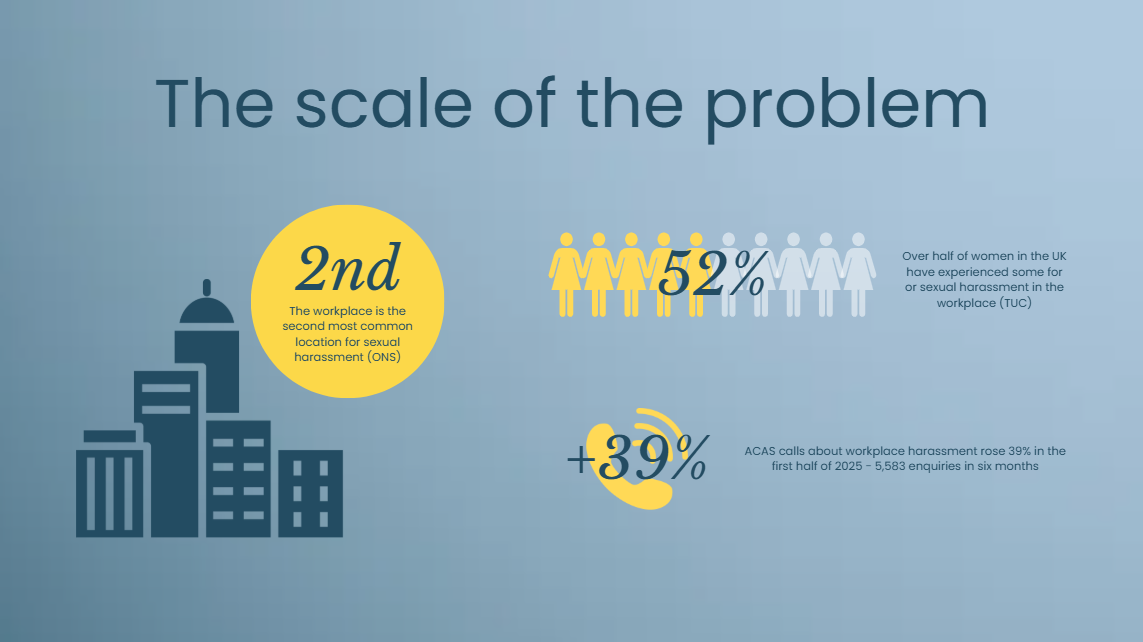
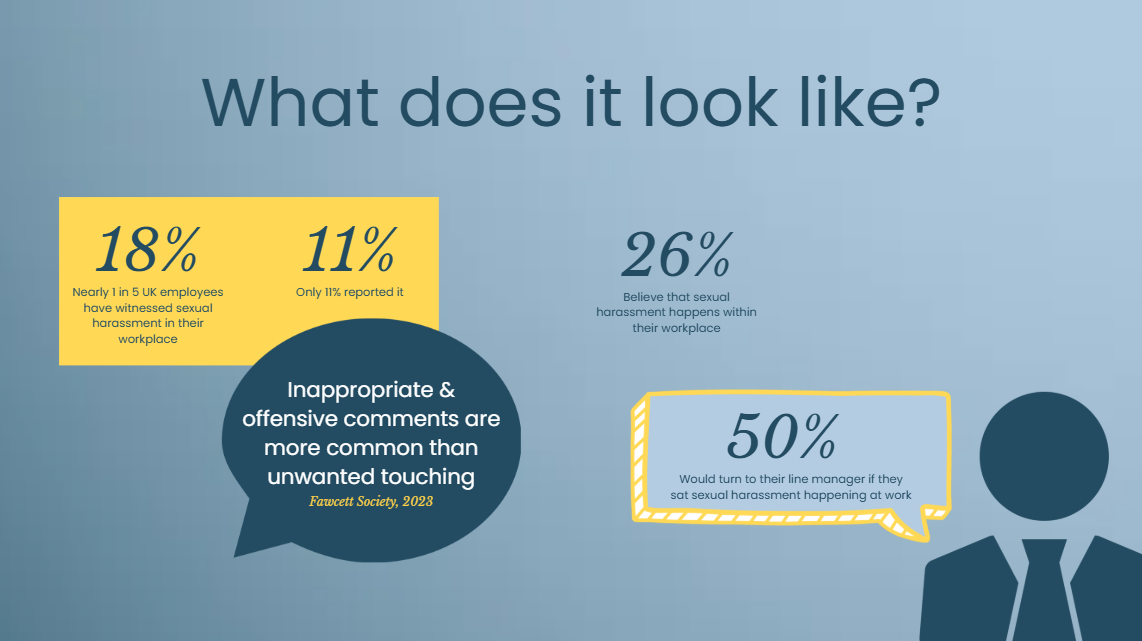
Research by Safecall shows that nearly one in five UK employees have witnessed sexual harassment in the workplace, yet only 11% reported it. ACAS calls about workplace harassment rose 39% in the first half of 2025 alone. And our own Benchmark Report, which draws on data from over 1,200 organisations covering more than six million employees, shows harassment is one of the fastest growing misconduct categories we track.
The gap between what is happening and what is being reported is not a coincidence. Kate Dodd, Partner and employment law specialist at Pinsent Masons, described it simply: shame and fear. Fear of not being believed, fear of consequences, fear of what speaking up might mean for someone’s job, their finances, their relationships. And shame – felt by everyone involved, on all sides – that holds people back from coming forward.
Shaun McKillop, an experienced Safecall workplace investigator and former Police Scotland senior investigating officer, added the practical consequence of that silence. The longer the gap between an incident and a report, the harder the investigation becomes. Witnesses move on. Evidence degrades. And trauma affects memory in ways that make reconstruction increasingly difficult over time.
The more organisations can do to make reporting feel safe, accessible and genuinely confidential – through independent channels, clear processes, and a culture where speaking up is normalised – the better the chance of a good outcome for everyone involved.
What actually constitutes sexual harassment?
Before an organisation can investigate sexual harassment, it needs to be clear on what it is investigating. And the legal definition is broader than many people realise.
Sexual harassment does not have to be physical, and it does not have to be intentional. Under the Equality Act 2010, harassment is defined as unwanted conduct that has the purpose or effect of creating an intimidating, hostile, degrading or offensive environment – regardless of whether it was directed at a specific individual.
That last point matters. An environment where inappropriate comments, banter or sexualised behaviour are commonplace can constitute harassment even if nothing is said directly to the person affected. As Kate noted, by the time something becomes physical it is usually far too late – the behaviour has typically been building for some time.
The practical implication for organisations investigating sexual harassment is clear: do not set the bar at whether something obviously physical occurred. The question is whether the conduct – whatever form it took – was unwanted and had the effect of creating a hostile or degrading environment.
What happens in the first 24 hours of a sexual harassment report?
When someone discloses a sexual harassment concern – whether to a line manager, HR, or through an independent reporting channel – what happens next is critical. Shaun drew on his police background to frame this precisely. In serious crime investigation, the period immediately after an incident is known as the golden hour – the window where getting things right makes everything that follows smoother, and getting things wrong creates problems that are very difficult to unpick later.
The same principle applies in workplace investigations, even if the timescales are different.
The most common failure at this stage is a line manager attempting to resolve things informally rather than escalating correctly. Promising confidentiality that cannot be kept. Having conversations that are not documented. Speaking to the wrong people before a proper process is in place. None of these happen through bad intent – they happen because managers are not trained for this situation.
Kate was direct on the legal consequences: informal handling that goes wrong, or is seen to sweep things under the carpet, is precisely the kind of situation that attracts EHRC attention. The regulator’s involvement, when it comes, typically traces back to a moment early in the process where a line manager tried to contain something rather than escalate it.
The role of the line manager when a disclosure is made is not to fix it. It is to respond with empathy, take the concern seriously, and get it to the right place quickly. Their first conversation can either build the trust that makes a good investigation possible – or undermine it in ways that are very hard to recover from.
What does a good sexual harassment investigation actually involve?
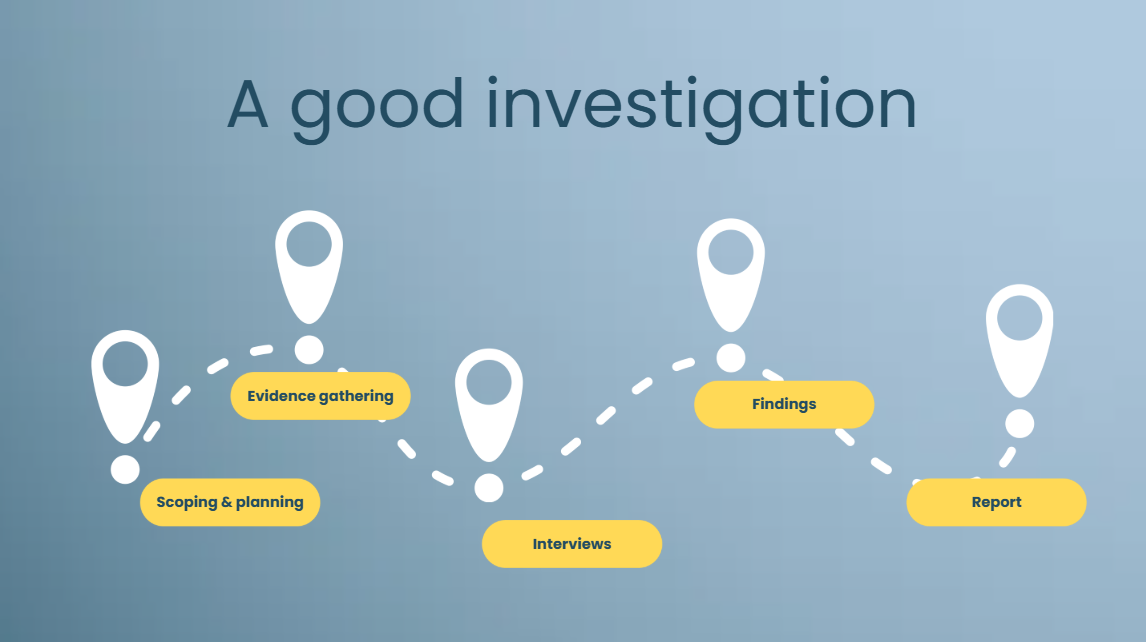
A well-run investigation into sexual harassment covers five stages: scoping and planning, evidence gathering, interviews, findings, and the report. Each one requires more care in sexual harassment cases than in a standard workplace investigation.
Scoping and planning: why terms of reference matter
Before anything else, an organisation needs to think carefully about what it is actually investigating, who will conduct the investigation, who needs to know what, and how the person who has raised the concern will be kept informed throughout. Shaun was emphatic on this point – the question every reporter asks at the end of their interview is what happens next? If the organisation has not thought that through before the investigation begins, it is already creating problems.
Clear terms of reference – setting out the scope of the investigation, the process to be followed, the decision-making chain, and the firewall between the investigator and any subsequent disciplinary process – are not bureaucracy. They are the foundation of a fair and defensible process. Kate noted that scope creep, where investigations expand without clear boundaries, is one of the most common causes of processes that unravel at tribunal.
Trauma-informed interviewing: what it means and why it matters
This was the area the audience wanted most to understand – and the one where the gap between expectation and reality is widest.
When someone has experienced a traumatic event, it affects how they recall and communicate what happened. They may give a non-linear account. They may contradict themselves. They may shut down during an interview, or seem unable to provide the clear, consistent narrative an investigator might expect. In any other context, these might be signs of an unreliable witness. In a trauma-informed context, they are trauma responses – and an investigator without specific training is likely to draw entirely the wrong conclusions.
The EHRC’s technical guidance is explicit: investigations into sexual harassment should be conducted by people trained in handling sensitive issues and understanding the impact of trauma. As Kate noted, most organisations are not meeting that standard – and they typically find out when it surfaces in a grievance appeal or tribunal claim.
Trauma-informed investigation does not mean being less rigorous. It means being rigorous in the right way – giving people time and space to process, conducting interviews in a way that minimises re-traumatisation, and understanding that an account that does not follow a neat chronology may nonetheless be entirely credible.
Shaun also raised the concept of survivor liaison officers – individuals specifically trained to act as a support and conduit for the person who has raised a concern throughout the investigation process. Larger organisations that handle sexual harassment reports regularly may want to consider whether this is something worth building in.
Findings and the report: what a defensible investigation looks like
The investigation report is the document that will be scrutinised if a case reaches tribunal – potentially years after the investigation took place. Kate was clear about what that means in practice. The report needs to be clearly structured, well evidenced, and transparent about how decisions were reached. Where one person’s account conflicts with another’s, the reasoning for preferring one over the other needs to be explicit – not just a statement of who was believed, but why, and what evidence supported that conclusion.
Given the current delays in the tribunal system, a report may not be examined for two, three or even four years. By then, memories will have faded. The written record of decisions made and evidence considered is all that remains.
Who should conduct a sexual harassment investigation?
This is one of the most important questions an organisation can ask – and one that needs to be answered before an investigation begins, not halfway through.
The answer depends on four things: whether the investigator is properly trained, whether they are genuinely independent, whether they have the time and bandwidth to do the job properly, and whether their seniority is appropriate for the case.
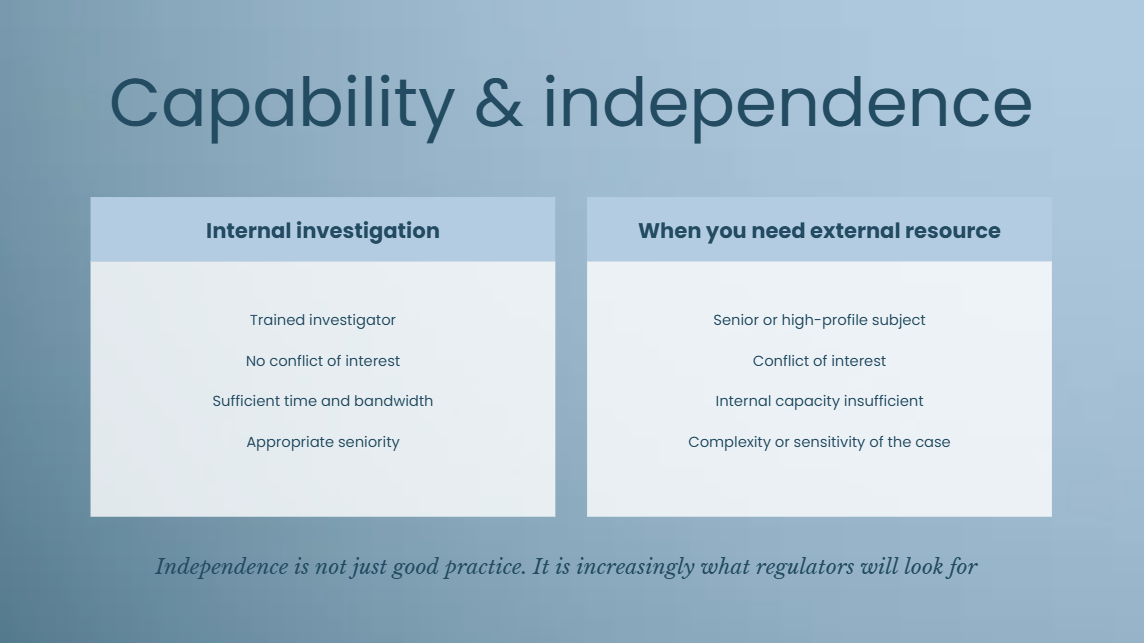
On independence, Kate made a point that landed strongly with the audience. She has seen organisational charts submitted as tribunal evidence specifically to demonstrate that an investigator was not truly independent despite appearing to be so. Reporting lines matter. Seniority relative to the subject of the investigation matters. And where genuine independence cannot be demonstrated internally – particularly in cases involving senior individuals, or where the complexity or sensitivity of the case demands it – external investigation resource is not a failure. It is the appropriate response.
On training, Shaun was direct: do not assume that an investigator who has handled grievances and misconduct matters has the skills needed to investigate sexual harassment. It is a different skill set. The trauma-informed dimension alone requires specific training that most general HR investigation programmes do not cover.
Frequently asked questions about investigating sexual harassment
Several questions came in during the session that are worth addressing directly. Note that responses below are based on responses that guest panellists, Kate and Shaun, provided during our webinar session.
Is there a time limit on sexual harassment complaints?
No. There is no limitation period on an employer’s duty to investigate a sexual harassment complaint. There are time limits for bringing a tribunal claim, though tribunals will extend these where it is just and equitable to do so. Organisations cannot decline to investigate on the grounds that something happened too long ago – though older cases will inevitably be harder to investigate thoroughly.
What should you do if someone will only speak to you in confidence?
There is no such thing as a truly confidential conversation in a workplace context. Managers and HR teams should not promise confidentiality they cannot keep. The right response is to be honest from the outset: I am happy to talk, but if you tell me something serious I may need to act on it. That honesty is also part of building the trust that makes a trauma-informed process possible.
At what point should a sexual harassment investigation be referred to the police?
There is no automatic duty on an employer to report to the police, unless safeguarding considerations involving children or vulnerable adults apply. However, organisations should check in with the person who has raised the concern about whether they have considered a police report, and should be aware that if a police investigation is running in parallel, it takes precedence. An employer must not take steps that could cut across or compromise a criminal investigation.
Should the person accused of sexual harassment be told who made the report?
This depends on the specifics of the case. The principle of natural justice requires that someone knows the case against them – but it does not necessarily require them to know who made the report if the details of the allegation can be communicated without revealing the reporter’s identity. This is an area where taking legal advice on the specific facts is strongly recommended.
What this means for your organisation
Investigating sexual harassment well is not simply a matter of following a process. It requires trained investigators, genuine independence, a trauma-informed approach, careful planning, and thorough documentation. From October 2026, the all reasonable steps duty means that the quality of your investigations will be directly scrutinised if a case is ever challenged.
If the session raised questions about your own organisation’s capability in this area, there are many ways that we can help – including training for line managers, training for individuals and teams responsible for investigating sexual harassment, and independent workplace investigations delivered by experienced professionals.
Watch the full session
The full recording of this session – including the Q&A – is available below. Previous sessions in the series, covering what is changing under the Employment Rights Act and what all reasonable steps looks like in practice, are also available via our webinar channel.
