When organisations think about improving their speak-up culture, the conversation usually starts in the same place. Do people know the channel exists? Do they know how to use it? Is it visible enough, accessible enough, communicated clearly enough?
These are reasonable questions, and they remain – particularly for organisations with dispersed, seasonal or hard-to-reach workforces – genuinely important ones.
But our Employee Voice Report 2026, based on an independent survey of 2,000 UK employees, suggests that for most organisations, awareness is not where the biggest gap lies. And spending energy there while the harder question goes unanswered is an easy trap to fall into.
74% of employees say they would know what to do if they witnessed misconduct at work. That is, on balance, an encouraging number. But one in four would not, and understanding why, within your own organisation and among your own people, is worth taking seriously.
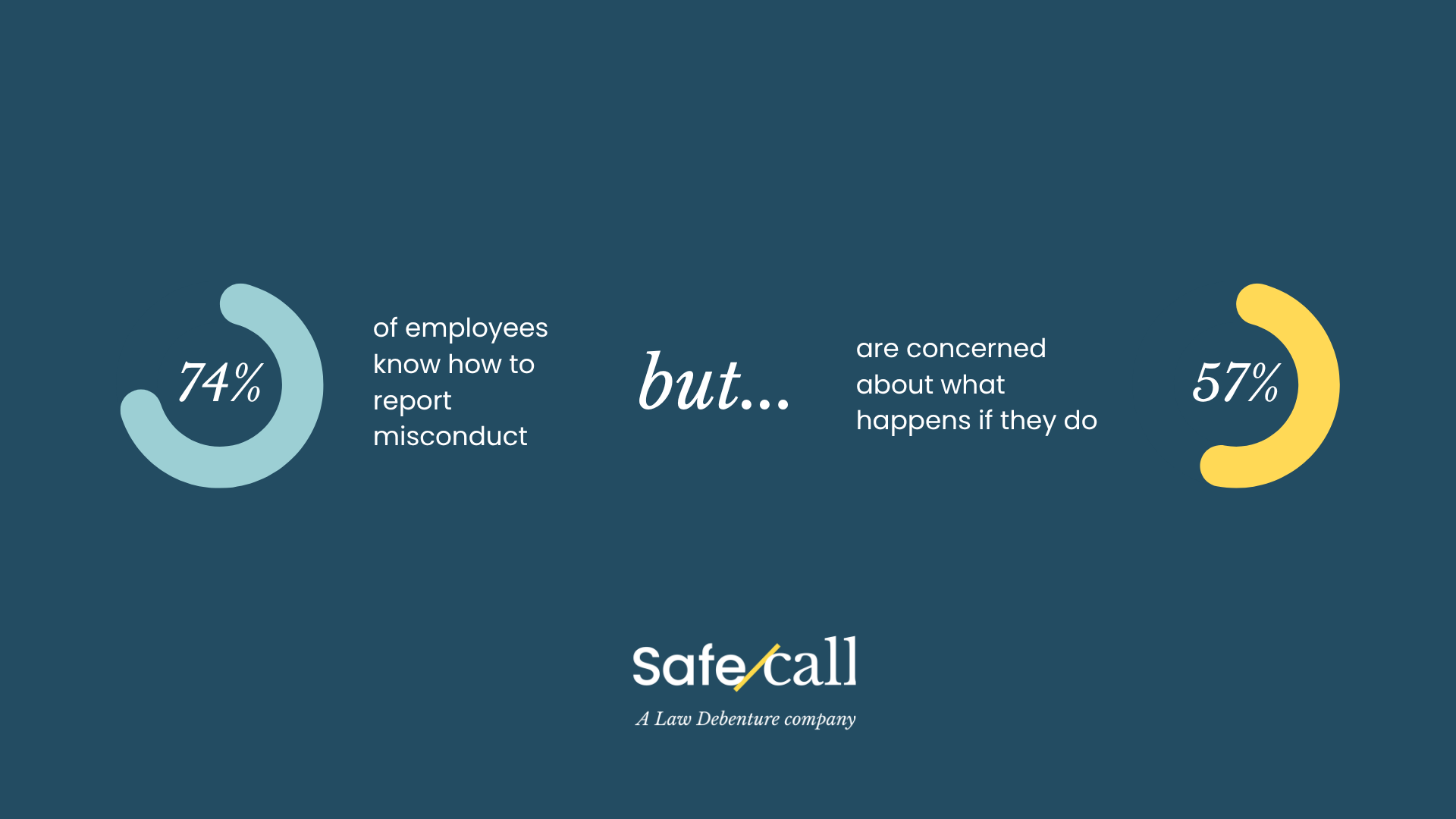
What the data also shows, though, is that knowing and doing are very different things. 57% of employees – nearly six in ten – say they are concerned about what happens if they raise a concern. Not whether anyone will pick up the phone or whether the form is easy to complete. What happens to them afterwards? Will be believed? Will anything change? And will speaking up will make their working life harder rather than better?
These concern sit at the heart of why people stay silent, and addressing them requires a different strategy to solving an awareness gap.
What people are actually worried about
The two most common barriers to formal reporting in our survey are fear of retaliation or negative career consequences, and a belief that nothing will change as a result. These fears are closely connected. When someone does not believe the organisation will act, they are also more likely to conclude that speaking up carries real personal risk. The two reinforce each other.
Both barriers are higher when it comes to HR and conduct issues – bullying, harassment, unfair treatment – than for financial misconduct. These are the concerns that are formally reported at a lower rate, face higher barriers when people consider raising them, and when they are raised, people are less satisfied with how they are handled. 52% of employees told us that HR and workplace culture issues feel more serious than financial misconduct because of the direct impact on people, and yet the data suggests these are the concerns organisations are, on the whole, least equipped to deal with well. That gap between how seriously employees feel these issues and how well they are handled when raised is one of the more striking findings in the report.
The gap between intention and experience
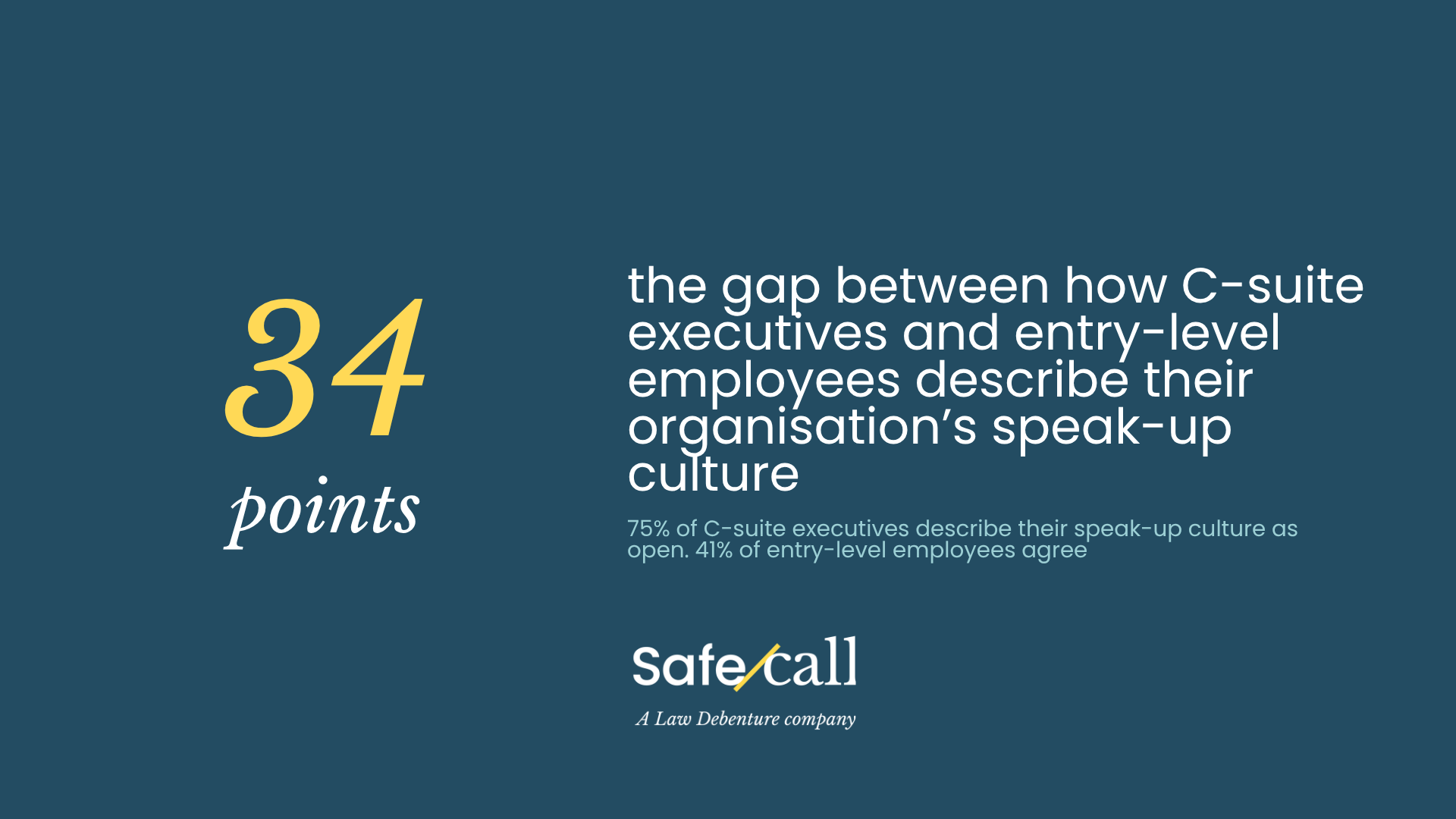
Another finding from the report – and what that was discussed at our recent User Group Meeting – is the 34-point gap between how C-suite leaders describe their organisation’s speak-up culture and how entry-level employees experience it. 75% of C-suite executives describe their culture as open, but only 41% of entry-level employees agree.
We do not think this reflects bad intent. In most cases it reflects limited visibility. Leaders are, understandably, further from the everyday experiences that shape how people feel about speaking up. But that distance has real consequences. Organisations end up making decisions about their culture based on a picture that is, at best, incomplete.
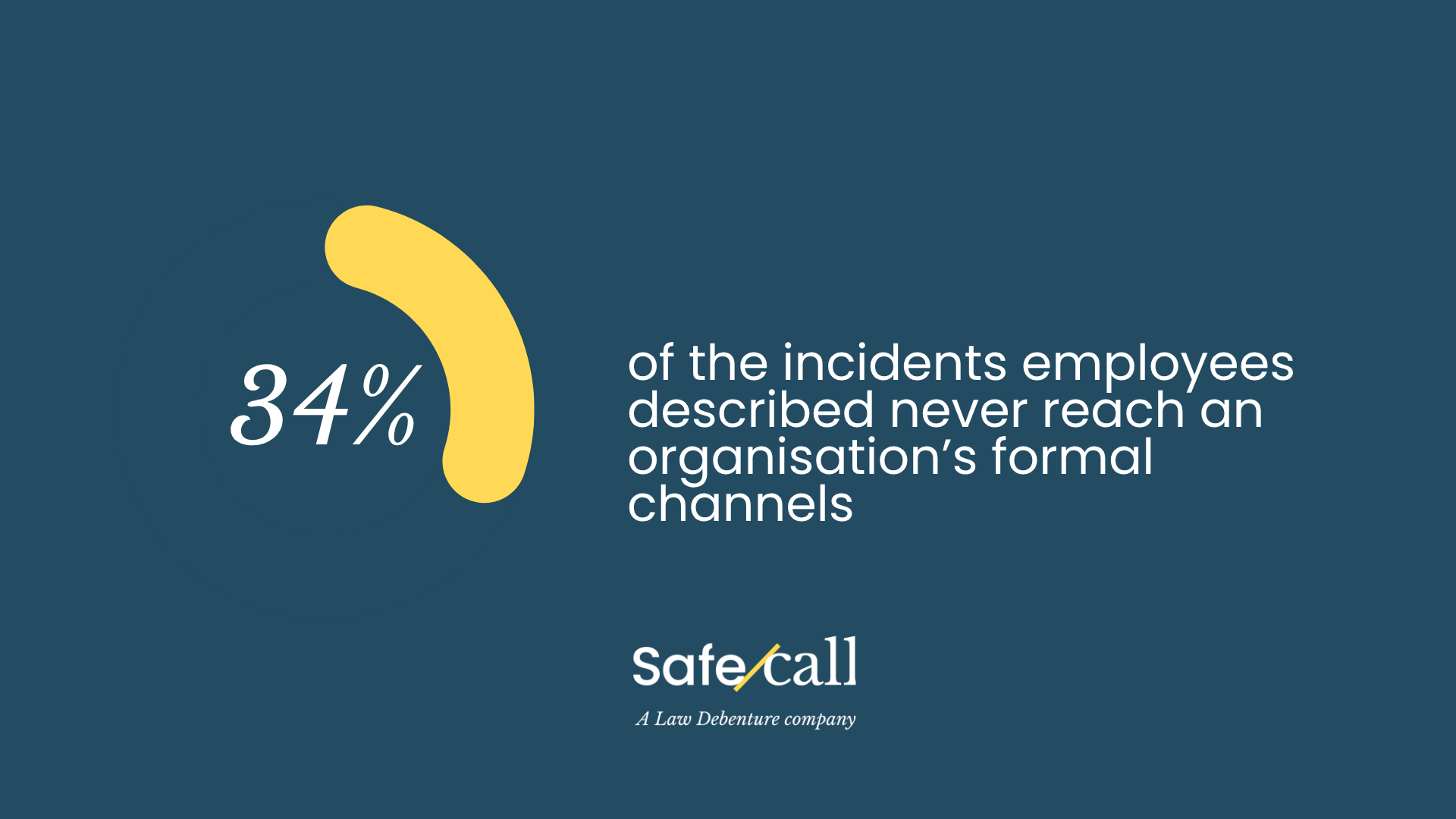
The 34% of witnessed misconduct that never reaches a formal channel is not randomly distributed. It skews towards HR and conduct issues, and towards people earlier in their careers. Understanding why, and what it would take for those people to feel differently, requires a different kind of listening than most organisations are currently doing.
What trust actually requires
There is a version of this conversation that ends with better communications. More visible channels, clearer guidance, refreshed training. And for some organisations, in some contexts, that is genuinely part of the answer.
But trust is not built through communication alone – it is built through what people have witnessed. What happened to the colleague who raised something last year. Whether the outcome felt fair. Whether anything actually changed. Whether the person who came forward was protected, supported and treated with the care their bravery deserved.
Every concern that is handled well builds confidence for the next person who is weighing up whether to come forward. Every concern that is handled badly – dismissed, mismanaged, met with silence – does the opposite. And people talk. Not always loudly, but they talk.
74% of your people know what to do. The question worth sitting with is what it would take for more of them to feel that it is worth doing.