Watch Safecall’s on-demand webinar on what the October 2026 third-party harassment changes mean for employers and how to prepare.
From 30 October 2026, the Employment Rights Act 2025 will make employers liable for harassment of employees by third parties unless they can demonstrate they took all reasonable steps to prevent it.
That includes clients, customers, contractors, visitors and others employees interact with through work. The duty also extends across all protected characteristics under the Equality Act, not only sexual harassment.
For many organisations, this creates a very different challenge.
You can train your own employees. You can put policies and reporting routes in place. But what happens when the risk sits outside your direct control?
In this Safecall webinar, Joanna Lewis, Managing Director at Safecall, is joined by Kate Dodd, Partner – Employment & Equality Law at Pinsent Masons, and Emily Webberley, experienced Ethics & Compliance Leader at Vodafone, to explore what third-party harassment means in practice and what employers should be doing now.
What does third-party harassment mean for employers?
Third-party harassment liability is broader than many organisations initially assume.
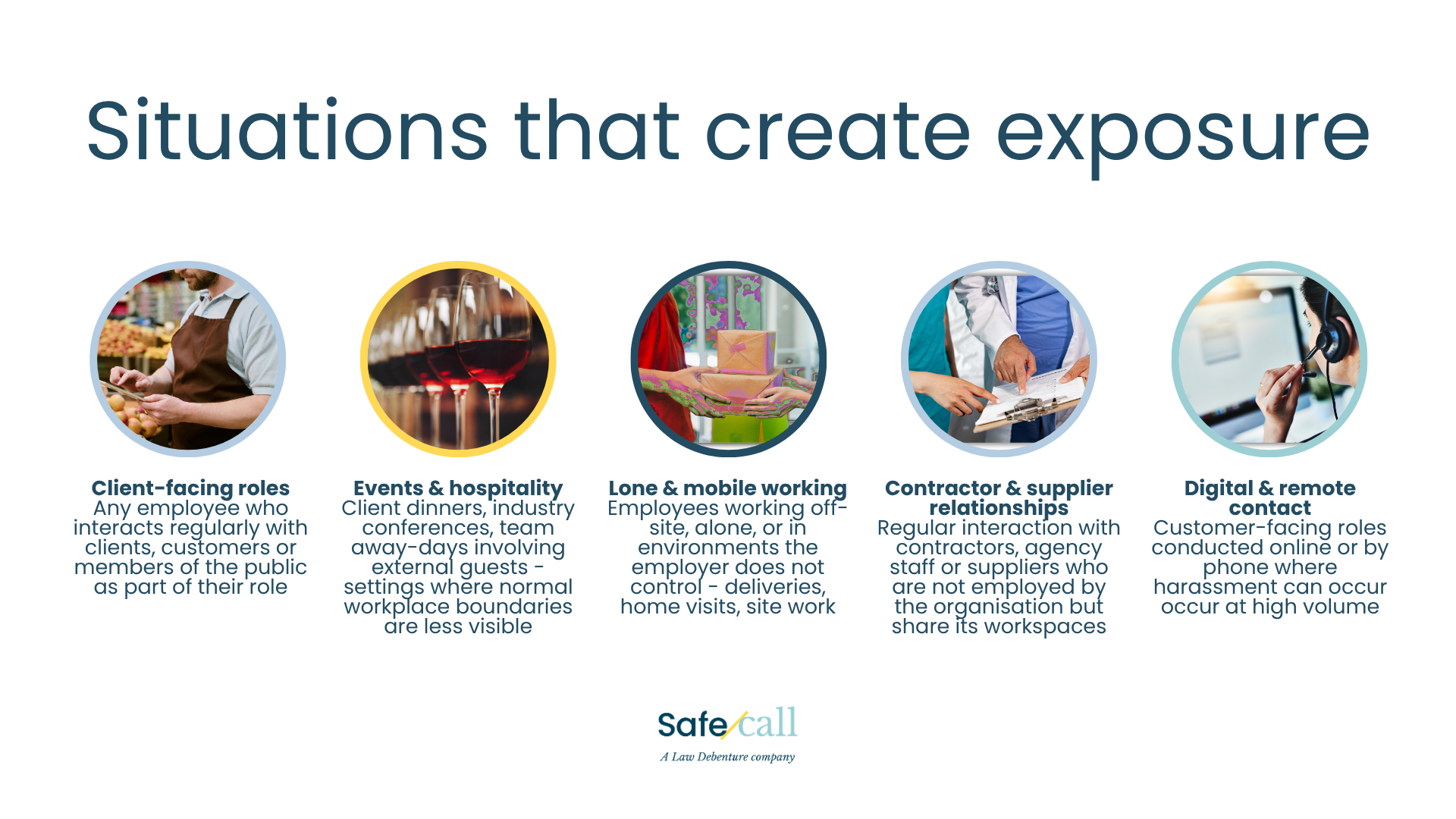
Third-party harassment can arise in a wide range of situations, including:
- client and customer-facing roles
- events and hospitality
- lone and mobile working
- contractor and supplier relationships
- digital and remote contact
The challenge is that employers cannot always control the environment, the people involved or what happens next.
That is why the focus is shifting from simply asking “what happened?” to also asking:
“What did we know, what did we do to prevent it, and can we evidence the steps we took?”
What you’ll learn in the webinar
The webinar explores:
- what changes on 30 October 2026
- where third-party harassment risk can arise
- what all reasonable steps could look like
- the role of risk assessments, policies, training and reporting routes
- how employers should evidence the steps they have taken
- why culture and employee trust matter when commercial relationships are involved
One of the strongest themes from the discussion was simple:
Do your employees genuinely believe their concerns will come first, even when commercial stakes are high?
Ressources complémentaires
What UK employers need to know about the upcoming changes to the Employment Rights Act 2025
A practical guide to what’s changing on 30 October 2026, when the Employment Rights Act changes come into force, and what employers should be reviewing now to prepare.

Les tendances en matière de reporting évoluent. Les attentes sont de plus en plus élevées. Êtes-vous prêt pour la suite ?
Safecall’s 2026 Benchmark Report explores wider speak-up trends, including harassment and bullying reporting, channel preferences and what the data can tell organisations about culture, trust and risk.
Watch the Employment Rights Act webinar series
Catch up on previous Safecall sessions covering the all reasonable steps duty, investigations, board oversight and wider Employment Rights Act preparation.
Besoin d'aide ?
If you’re reviewing your approach to board reporting, culture oversight, harassment risk, speak-up data or Employment Rights Act preparation, we’d be glad to have that conversation.
Appelez-nous au +44 (0) 191516 7720 ou contactez-nous via le formulaire ci-dessous :